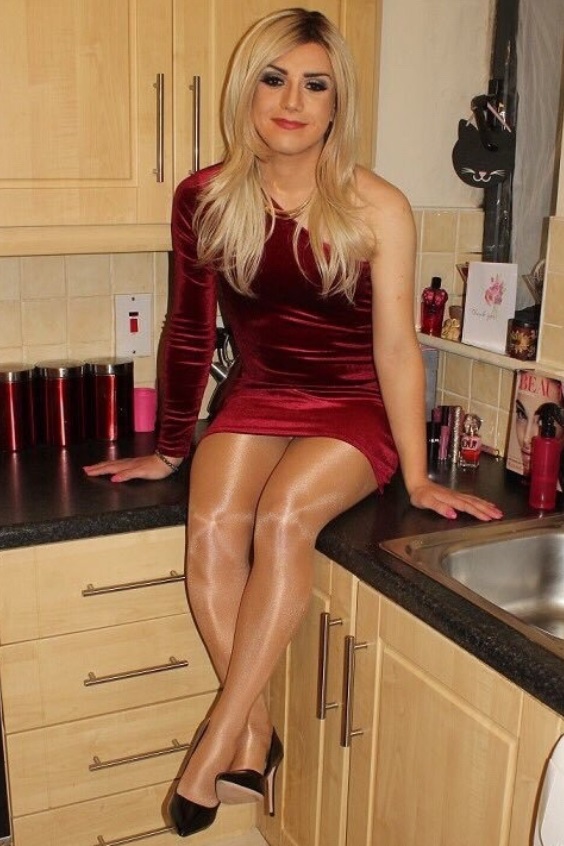
Okay, Real Talk About Pantyhose
If you've ever stood in front of your drawer at 6 PM looking at a pile of
pantyhose like you're trying to decode ancient hieroglyphics, you're not
alone. I've been there. More times than I'm willing to admit to anyone who
knows me in real life.
Here's the thing about pantyhose: they look simple. You buy them, you put
them on, you go about your day. Except someone decided that wasn't
interesting enough, so now there are different sizes, colors, finishes,
patterns, thicknesses, and these cryptic little numbers on the package that
might as well be lottery tickets for how much sense they make at
first.
And then—oh, and then—there's the absolute joy of getting them on without
accidentally creating an expensive pile of nylon confetti.
So yeah. I've learned a few things. Not always gracefully, and definitely
not always the easy way. But I'm here to share what I wish someone had sat
down and explained to me when I was just starting out, over coffee, without
making it sound like a boring lecture.
Start With the Right Size (No, Really)
This sounds obvious. It's not.
One of the biggest mistakes I made early on—and I'm guessing you might
too—is choosing pantyhose based on whatever size I normally wear in other
clothes. Like, "Oh, I'm a medium in dresses, so medium pantyhose!" Except
pantyhose literally don't care about your dress size. They care about
height, weight, body measurements, and whatever other mysterious factors the
manufacturer decided matter.
Here's the thing that nobody mentions when you're a crossdresser: those
size charts? Those size charts are based on measurements and body
proportions typical of the women the garment is designed for. Most
manufacturers aren't thinking about broader shoulders, different
waist-to-hip ratios, or the fact that you might have more muscle in your
thighs than the "average" woman in that size range. That doesn't mean you
can't wear pantyhose. It just means you need to pay closer attention.
So before you buy anything, go check the sizing chart. I know it's boring.
Do it anyway. Check your actual measurements against what the manufacturer
lists—not the size of the dress you're wearing. That's a completely
different sizing system, and they don't talk to each other.
And please, please don't fall into the trap I fell into: buying a smaller
size because you think it'll make your legs look slimmer. (Spoiler: it
won't. What it will do is have you wrestling with pantyhose at midnight,
wondering why you made that choice, while your waistband slowly migrates
toward your knees.)
If you're between two sizes, I'd usually rather try the larger size first.
I'd rather have a little extra room than spend the evening fighting with a
waistband that wants to roll down or a crotch that refuses to stay where it
belongs.
Once you've got them home, here's the real test: Wear them for a while and
actually pay attention. Can you sit comfortably? Can you bend your legs
without feeling like you're about to split a seam? Does the waistband stay
put, or are you constantly hiking it back up? Does the fabric feel evenly
stretched, or is there one area that's painfully tight?
That last part is important because crossdressing already involves enough
moments of standing in front of a mirror wondering whether something looks
right. Your pantyhose don't need to become another source of unnecessary
frustration.
Denier: The Number That Actually Matters
Okay, so there's this number called denier, and when I first heard the term
I just nodded and pretended to understand. Of course I didn't. So let me
save you that embarrassment.
Denier tells you how fine or thick the yarn is in your pantyhose. Lower
numbers mean sheerer, more delicate hosiery. Higher numbers mean more
coverage, warmth, and substance. Simple enough, right?
Except here's where it gets weird: the same denier can look surprisingly
different depending on the color, the material, how much the fabric
stretches, and how the pantyhose are constructed. So think of these numbers
as a useful guide rather than a scientific law.
Here's a rough scale to get your bearings:
5–10 denier is ultra-sheer territory—barely-there, just enough to make your
legs look polished without looking like you're actually wearing anything.
Beautiful and elegant, but very delicate. If you're new to pantyhose, I
wouldn't make this your first experiment.
10–20 denier is still very light and transparent, but with a little more
forgiveness built in. This is where you get that classic "I'm wearing
pantyhose, but they're not supposed to be the main event" vibe.
20–30 denier is one of my favorite ranges for everyday dressing. You still
get that transparency, but the color becomes more noticeable and the fabric
feels less fragile than the ultra-sheer stuff.
30–40 denier gets noticeably more coverage. Your legs still look like legs
rather than being hidden under a solid block of color, but imperfections
become less obvious and everything feels a little more polished.
40–70 denier is when things shift pretty dramatically. Dark colors in
particular can look quite solid. These are useful when you want real
coverage, warmth, or just a completely different aesthetic from sheer
pantyhose.
80 denier and above is generally opaque tights territory. The color is
solid, the fabric is heavier, and they're particularly great for colder
weather. At this point, you're not trying to create the illusion of bare
legs—you're making the hosiery part of the outfit.
Here's what I wish I'd understood earlier: the number doesn't tell you
which denier is best. It tells you what effect you're starting with.
Want your legs to look almost bare? Go lower. After the classic polished
pantyhose look? You're probably somewhere in the 15–30 range. Need more
coverage or warmth? Move upward. Want the pantyhose themselves to become a
statement? That's when heavier, more opaque styles get interesting. There
isn't a magical "best" denier—there's only the denier that makes sense for
what you're wearing, where you're going, and the look you're trying to
create.
Which is infinitely more useful than just memorizing a number.
A note about stretching
There's one more little detail worth knowing, especially if you're a
crossdresser.
Pantyhose are meant to stretch. And when the fabric stretches more, it can
look more transparent. That means the same 20-denier pair may not look
exactly the same on every body.
So don't be surprised if a pair looks slightly sheerer on you than it did
in the product photograph.
That's not necessarily a problem. It's just another reason I treat the
number on the package as a starting point, not a promise.

If You're Buying Your First Pair
If you've never bought pantyhose before and you're staring at dozens of
packages wondering where on earth to begin, here's what I'd do.
Don't start with fishnets.
Don't start with a crazy pattern.
Don't start with the most expensive pair in the store.
And probably don't start with ultra-sheer 5-denier pantyhose that look
absolutely stunning in the package but require the patience of a saint to
actually put on without creating a run.
For a first pair, pick:
a size based on the manufacturer's chart around 15–30 denier a simple nude
shade close to your skin tone, or black a relatively smooth, uncomplicated
finish nothing with a pattern something you can actually wear with at least
two or three outfits you already own.
Here's why: your first pair should teach you something, not stress you
out.
You want to focus on how pantyhose actually feel on your body, how they
change the way your legs look, how they work with your clothes, and whether
you're comfortable wearing them. You don't want to spend the entire
experience wondering whether you've accidentally chosen something completely
impractical.
If I were starting all over again, I'd buy one inexpensive pair and one
better-quality pair in roughly the same denier, then compare them. That's
actually a much better experiment than buying five wildly different pairs
and having no idea what you liked or didn't like about any of them.
Once you know what works for you, then you can start having fun.
And trust me—there are so many ways to have fun with pantyhose.
But first, learn what works for you.
Color: The Part Where You Get to Have Opinions
Nude and black are your safety net, and there's nothing wrong with
that.
Nude is supposed to look natural—except "nude" is not actually one color.
It's a whole spectrum. If you pick a shade that's dramatically different
from your actual skin tone, you'll end up with this weird disconnected look
that just feels off. So if you go the nude route, try to match it reasonably
close to your actual skin. It matters.
Black is infinitely more forgiving. Black pantyhose look sophisticated,
they work with almost everything, and they create this nice continuous line
from your legs straight down into your shoes. They're reliable. Boring,
maybe, but reliable.
But here's where it gets fun: don't stop at nude and black.
Brown, gray, burgundy, navy, deep red—these colors can be absolutely
gorgeous when they actually work with the rest of your outfit. And
sometimes? Sometimes you just want to wear purple pantyhose because you feel
like it. I'm not here to talk you out of that. Life's too short to wear
boring hosiery if you don't want to.
Finish: Matte, Natural, Silky or Shiny?
Here's another thing I completely overlooked when I was learning about
pantyhose: two pairs can have almost the same denier and color and still
look completely different.
That's because of the finish.
A matte finish has basically no shine to it. It looks understated, natural,
and honestly, kind of invisible—which is great if you want your pantyhose to
just... exist without anyone thinking about them.
A natural or satin finish has a subtle smoothness. There's a little shimmer
when the light catches it, but you're not announcing "I'm wearing
pantyhose!" from across the room. It's the goldilocks zone for a lot of
situations.
A silky finish is smoother and more visibly luminous. Your legs look
polished, almost glowy, and it works beautifully with dressier outfits where
you actually want to look put-together.
And then there are the shiny or glossy finishes.
These are definitely not trying to disappear. They catch the light, make
the hosiery impossible to ignore, and create a completely different vibe.
Personally? I think they can look absolutely fantastic when you're being
intentional about it—but pair them with a very busy outfit, and things can
get a little... enthusiastic.
For your first pair, I'd probably go with a natural or lightly silky
finish. It's forgiving, it works with most outfits, and it lets you focus on
the other stuff you're learning.
Once you understand how different finishes actually change the way your
legs look and feel, then you can start experimenting. And that's when
hosiery gets fun—sometimes one tiny detail completely transforms the whole
outfit.
The Occasion Actually Matters (Yeah, I Learned This the Hard Way)
The pantyhose that look stunning with a cocktail dress? They might look
completely out of place with your everyday jeans-and-a-nice-top situation. I
know this because I've done it. And then spent the day second-guessing
myself.
For a more polished, elegant look, sheer or semi-sheer nude or black is
usually your move.
For colder weather, you want something thicker. Opaque hosiery isn't just
warmer—it actually changes how the outfit feels. It becomes heavier, more
grounded.
For casual outfits? That's where you get to play. Patterns, textures,
unexpected colors—they can completely transform the personality of an
outfit. Just make sure your pantyhose look intentional, like they're part of
your outfit and not something you grabbed in a panic five minutes before you
left the house.
The Shoe Trick (My Favorite Little Secret)
Black pumps + black pantyhose = a clean, unbroken line from hip to toe.
Very elegant, very intentional.
Nude or tan hosiery with shoes in the same color family? Also gorgeous,
just a slightly different vibe.
And if you're wearing brown shoes, don't automatically assume black
pantyhose is your only option. Brown or tan hosiery can actually look
better.
The annoying truth is that these little details make a huge difference.
Which is annoying because it means you have to actually think about them.
But once you start noticing how these things work together, you can't unsee
it. And your outfits will look better for it.

Comfort is Not Negotiable
I know it's not as fun to talk about as denier and colors, but comfort is
actually the most important part. A gorgeous pair of pantyhose that makes
you uncomfortable is just... uncomfortable. You'll spend your entire day
wanting to rip them off.
Look for a size that actually fits your body. Look for a waistband that
doesn't dig in or slip down. Look for fabric that doesn't feel like you're
being slowly suffocated.
When putting them on, take your time and gently gather the fabric up
toward the toe before pulling it over your foot and leg. Don't yank. Your
nails are stronger than you think.
And here's the thing: if you're new to this, don't assume your first pair
of pantyhose represents all pantyhose. Different brands and styles feel
completely different. Some are silky, some are cottony, some cling to
everything. You might find that one brand feels amazing while another
brand from the same store feels like torture.
Sometimes you just have to experiment. Yes, I realize that sounds
suspiciously like permission to buy more pantyhose. I'm comfortable with
that logic.
Does More Expensive Mean Better?
Not necessarily.
And I think this is worth saying because it's very easy to assume that a
$30 pair of pantyhose must be three times better than a $10 pair.
It isn't that simple.
Price can reflect better yarn, better construction, a nicer finish, a
more comfortable waistband, better shaping, more careful manufacturing—or
sometimes just the name on the label. (And yes, I've absolutely paid for
the label before. No judgment here.)
Here's what I have noticed, though: once you start wearing pantyhose
regularly, quality becomes much more noticeable.
A better-made pair may feel smoother against your skin. It may sit more
comfortably at the waist. The color may look more even when the fabric
stretches across your thighs. And it may survive considerably more wear
before developing a run or losing its shape.
That doesn't mean you need to spend a fortune.
For everyday experimentation, inexpensive pantyhose can be perfectly
fine. Honestly, I'd rather see a beginner buy two reasonably priced pairs,
figure out what they actually like, and save their money than blow $60 on
something they end up hating.
But there are times when spending more makes sense.
If you already know you love a particular denier, color, and finish, a
better-quality pair can be worth trying.
If you're buying something for a special occasion, you may care more
about how the finish feels and looks than what the tag says.
And if you've found a pair that fits you beautifully and lasts noticeably
longer than the cheaper alternatives, then the higher price may actually
be cheaper in the long run. (That's the hosiery version of penny-wise,
pound-foolish.)
The important thing is not to confuse expensive with good.
Try things. Pay attention to how they feel after an hour of wearing them,
not just how they look when you first put them on. (That's where the magic
happens—or doesn't.)
And when you find a pair that makes you think, "Oh. So *this* is what
good pantyhose feel like," remember the brand.
You'll thank yourself later.

Why Pantyhose Became Important to Me
For me, pantyhose were never just another item of clothing. They were the
piece that made everything else click into place.
I remember the first time I put on a pair that actually felt right with
the rest of my outfit. Suddenly the skirt, the shoes, and the blouse
didn't feel like separate pieces anymore. They felt like an outfit.
Maybe that's why I still pay far more attention to hosiery than any
reasonable person probably should.
I wish I could tell you there was some profound explanation for it.
There probably isn't.
I just like the way the right pair can make everything come
together.
My Greatest Pantyhose Hits (And Misses)
I've bought the wrong size. Multiple times.
I've picked a color that looked amazing in the package and then looked
absolutely awful on my legs. (Why does this keep happening?)
I've worn things because I liked them as individual items, not because
they actually worked with the outfit. Spoiler: they didn't.
And I've definitely underestimated how long it takes to carefully put on
delicate pantyhose when you're running late. The answer is, apparently,
"forever."
But here's the good news: mistakes are genuinely great teachers. After a
while, you start noticing things automatically. You figure out which
colors actually work with your skin tone. You learn which denier feels
right. You discover which shoes create the look you're after. And
eventually—and this is wild—choosing pantyhose stops feeling like this
complicated puzzle.
It just becomes part of getting dressed.
Want to see pantyhose in action? Check out the
Crossdressers in Pantyhose Gallery
to see how different styles land on real bodies.
My Simple Pantyhose Decision Guide
Okay, so here's the thing. When I'm standing in front of a wall of
pantyhose, paralyzed by choice, I ask myself a few stupid-simple
questions. And honestly? They've saved me from a lot of regret.
Do you want your legs to basically disappear? Sheer, light denier, and a
color that matches your skin. That's the whole trick. Your legs become
this seamless line from hip to shoe, and nobody's thinking about the
hosiery. They're just thinking "legs."
Going for everyday dressing? That's probably 15–30 denier territory.
You'll actually see the pantyhose—they're there—but they're not stealing
the show.
Want to actually hide some stuff? Bump it up to 30–50 denier. More
coverage, more forgiveness, and honestly, they start feeling more
substantial when you put them on.
Want opaque, or you need warmth? 60 denier and up. At this point, you're
not trying to be subtle. You're making a choice, and you're owning
it.
Finish is freaking you out? Natural or lightly silky. It's the Goldilocks
zone. You can't really go wrong. Matte if you want them to vanish into the
background; shiny if you're like, "Look at these legs, everybody."
Color panic? Nude elongates. Black commits. Pick one.
Your first pair ever? Right size, moderate denier, nothing wild.
Seriously. You have permission to be boring here. The fun stuff comes
later.
And if you're still sitting there, completely lost?
Then just buy the ones that fit and make you want to actually wear them
again. Because here's what I know for sure: the best pantyhose aren't the
ones that look amazing in the package under fluorescent lights at the
store.
They're the ones that make you forget you're wearing them and make you
smile when you catch yourself in the mirror.
That's it. That's the whole game.
The Only Rule That Actually Matters
There is no perfect pair of pantyhose for every crossdresser. There isn't
even one perfect pair for every single outfit.
The best pair is the one that fits, works with what you're wearing, and
makes you look in the mirror and think, "Yeah. That's exactly what I was
going for."
And if you get it wrong?
Welcome to the club.
I've been a member for years.
That's how we learn.
And sometimes, that's where the fun starts.